I've written a letter to the landlord saying we received his (very odd) notice, that his "terms" are not acceptable, and that we will be moving out.
We've begun looking for a place. There are a lot of places available in our price range (I'm hoping for at least a hundred less than we are paying here) though not as many in the location I am hoping for (near the university).
We did look at this one yesterday, which is lovely:
I am waiting to hear if the landlord will accept our tiny zoo of two cats and a dog, and what his philosophy is about who takes care of fallen trees. The rent is perfect -- a hundred and twenty less than we're paying here -- and it has hardwood floors throughout. Though not central air, just window units.
Dr. Skull grumbles when I suggest a duplex or a townhouse, though these seem a practical solution to me. We'll see if I can't twist his arm.
Thanks to everyone who has donated so far! Not only are you making this move possible, you have reinforced my faith in humankind. Go us!
My landlord is having some issues. Originally he was an excellent landlord, if a bit reluctant to fix non-essential items (like our gate, which was broken when we moved in and has never been fixed). But over the past few years he's been growing increasingly strange.
He'll be perfectly pleasant sometimes when we call him for a repair -- when our 15 year old dishwasher finally quit, for instance -- and then lose his rag the next time (a clogged drain).
It's not like we call him often, either. I usually manage most repairs myself.
Anyway, yesterday he sent us this bizarre little letter saying that we were "responsible" for the breakages and damages to the house, and that he wasn't going to "unilaterally" pay for them anymore. Also that he was "revoking" our deposit and applying it to the costs we had already incurred.
If we didn't like this, he said, we could move.
He's well into his 80s, so this could be age-related dementia. But he's also a rich white Republican, so it could be just entitled rich guy hatefulness.
In any case, we really need to move to a less expensive place anyway.
Except, as all y'all know, we're stony broke. (A combination of no work all summer and heaps of medical bills last winter.)
If anyone feels moved to donate to the delagar moving fund, this would be the time.
First Day of Fall 2019. Things I have Learned so Far:
Almost all of my students are working full-time
Almost none of my students are on Twitter
Almost all of my classes are well under cap (this is very unusual -- up until a few years ago, every class was at or over capacity every semester)
None of them drink soda anymore -- they drink water, and almost all of them have their own refillable water bottles
Lots of tattoos
Not so much dyed hair
They get very nervous if you ask them to draw pictures*
They're very, very strict about grammar and spelling
Their biggest worry is failing
They've done a lot of cool things**
*I do this thing where I have the students fill out 3X5 index cards with their names, their preferred emails, and their majors, so that I'll have that information. I also have them add other details -- like what their biggest worry is, or something cool they've done. This year I had them draw a little picture in one corner, which was a source of great anxiety. "A picture of what?" "What do you want us to draw?" When I told them to just have fun with it, though, they calmed down.
** One of them swam with sharks. Another works with circuit boards for fun. Another studies cryptids. And one traveled to Germany this summer to work in a winery.
I'm especially pleased about Zen Cho's win, and also Alex Harrow's.
Also The Good Place winning for Best Dramatic Presentation: Short Form, and Spiderman: Into the Spiderverse for Best Dramatic Presentation: Long Form. The Good Place is excellent television, and Spiderman was amazing.
And I was glad to see Gardner Dozois win one last time. He'll be missed.
So I was having this discussion with a buddy of mine about this commercial which has populated the childhood of American children for the past 60 years:
The catch-line is always "Trix are for kids!"
So my friend and I were talking about the weirdness of this commercial, which relies on children frustrating the desires of another, and mocking and tormenting another, into order to fulfill their own desire -- and their own desires for something both unnecessary and unhealthy, let's not forget. An early commercial makes this even more explicit:
The discussion sparked a memory of how, when I was a young media-saturated toddler delagar, shopping with my parents on Sunday morning at Schwegmann's
I'd always pester my father for Trix, just as the TV had told me I should. "I want Trix!" I would say. "Can we get Trix?"
"Trix are for kids," he would say cheerily, walking on past.
Far from annoying me, this would puzzle me. "But I am a kid," I would say, as if this were some information he was lacking.
"Trix are for kids," he would repeat, continuing on down the aisle.
"But Daddy," I would say, running after him, "But Daddy, I am a kid! So can I have some?"
"Trix are for kids!"
I was just convinced, when I was five years old, he was simply missing the facts. Like if I could get him to understand the data -- that I was a kid -- he would smack himself in the head and say, Oh, right! do a 180 in the aisle and buy me the cereal.
It occurs to me now that this is the fundamental error we are making when we try to hold a reasoned debate with MAGA Americans. We think they are just missing the facts. We think if we just supply them with the data, they will say, oh, right! Now I see, do a 180, and begin acting like decent human beings.
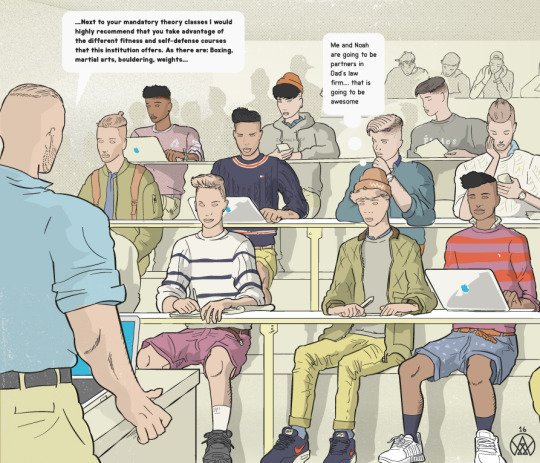
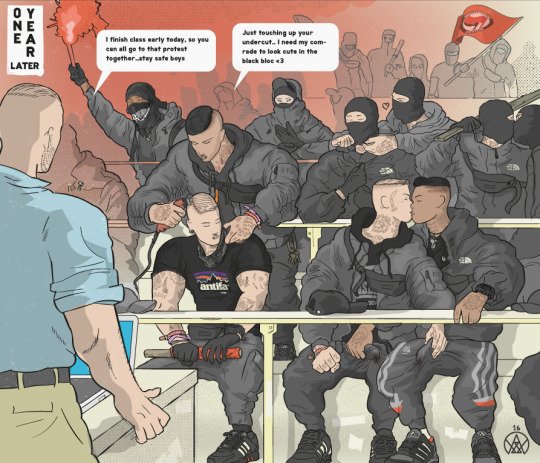
But they aren't missing the data. Like my father, they are perfectly aware of the facts. They know that climate change is real. They know that the USA has kids in cages. They know that Trump is looting the country, and that he changed the tax laws to put more money in the pockets of the 1%. They know that Trump is gutting the EPA to allow corporations to make more money, while destroying our water, air, wetlands, and our national parks. They know socialized medicine is the only system that works. They know antifa is not a terrorist organization, and that Proud Boys is. They know that police violence is a problem.
They know all this. We can repeat this information all we like, we can present all the evidence we want, under the delusion they're just missing the facts, and that if we give it to them, they'll say, oh right, and do a 180.
But that's not going to happen, because they don't care about evidence. They care about power and about wealth. They care about hegemony. They care about their privilege, and keeping that privilege. If they have to mock and torment people to keep it, well, they'll do that. If they have to exploit people to keep it, they'll do that too. If they have to destroy the planet, well, they're Good Christians, aren't they? They know this is not the only world.
In conclusion: Vote every single member of the GOP out in 2020.
In light of which, this is interesting -- we lose more people to guns than to cars, and more to drug addiction than to guns
Guess who paid for the huuuge tax break. Yeah, that would be people like me. Meanwhile, ‘Those in
the top 1%... got an average tax cut of about $33,000’
I remember the glee that surrounded these liars when they broke their scam
Thursday and Friday are our pre-school conferences, and Monday my first day of classes. I had the entire summer to write, since none of my classes made, and I still didn't get as much done as I wanted to.
Yuval Noah Harari, Sapiens: A Brief History of Humankind Non-fiction, but very readable. Harari starts from the big bang and moves forward. His overarching theme is that fiction -- myths, religion, laws, corporations, nations -- made it possible for humankind to become the dominant animal on the planet, by allowing us to move past the small band stage of organization. An example is religion. When we can all identify as Catholics, then we all know what rules we order our world by, and we can thus cooperate with total strangers, in a way we can't without those rules. Same for, say, governments. When we identify as US Citizens, we have a set of rules we all agree on, and then we can cooperate with total strangers.
This ability to make up rules about the world, and then believe that those rules are real (instead of just made up by us), Harari argues, is our great power. His argument is compelling.
Of course you see the problem. We identify as US Citizens, but do we agree on the set of rules? Right now we are vehemently disagreeing, because the set of rules is changing. Harari notes this is also something humans can do -- change their rules radically and abruptly. (Cf the French Revolution, when we went from the Divine Right of Kings to the Sovereign Rule of the People.)
Very much a must-read, just for this insight alone.
ETA: Boy, did this book go downhill fast after that chapter.
I'd read about 60% of it at that point. After that, I hit the chapters on religion and science, in which Harari argues that science functions as religion, or at least serves the same purpose as religion. I might have gone along with him, since his basic point is that science, like religion, allows people to cooperate and work together. But his argument in these chapters shows that he fundamentally misunderstands how science works, and what science is. For instance, he argues that evolution -- and evolutionary science -- is about evolving into superior creatures; or devolving into inferior beings.
Now it is true that Social Darwinists act as though this is what evolution means -- that evolution has a teleology, and that this is that teleology, the creation of some Better Human (that's why many people in the USA today want a "certain" sort of person to reproduce, and other sorts not to do so).
But that is not what actual evolutionary science is about. Evolution has no aim. There is no "superior" or "better" creature in evolution. There's a creature that is fit for the environment that exists right now, which is the one that survives. No moral element to that fitness. And there is certainly no "devolving" in evolution. The very notion is an oxymoron.
So at that point, I'm afraid, I lost all confidence in Harari as a scholar, and when I looked around to see what other reviewers said, it seems he has made similar errors in basic facts in other places.
Although I still like what he said in the first half of the book, I can no longer trust him, and no longer recommend this book.
cop: do you know why i pulled you over me: because the police force is a fascist institution designed to protect the wealthy cop: there's a man in your trunk me: yea a 𝙧𝙞𝙘𝙝 man