Showing posts sorted by relevance for query DeWitt. Sort by date Show all posts

Tuesday, September 04, 2018

What I'm Reading


Being so sick for so long meant I had very little strength to do anything. Even watching media took too much out of me -- I could watch about half an episode of something like Brooklyn 99, for instance, and then I would be too exhausted to continue, and have to go lie down for awhile.

On the other hand, somehow reading wasn't exhausting at all. So I've read a lot over the past few weeks. These are the new books I read and finished. (I reread a lot of old books -- Connie Willis's Passage, for instance, which is excellent; and Middlemarch for about the 10th time, but I won't include those.)
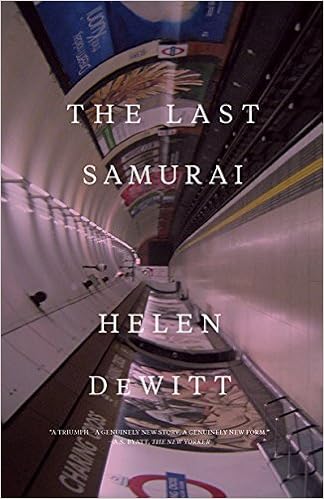

Image result for helen dewitt the last samuraiHelen DeWitt, The Last Samurai

This is a re-issue of a book published originally in 2000, which I didn't know when I picked it up. It's pretty much nothing like the sort of book I usually like, since DeWitt is playing with form and voice and structure, while my usual favorite books are straight-ahead narratives.

But I highly recommend this one. Despite the structural games, DeWitt never loses the reader, and despite the somewhat standard plot (boy searching for his father), the book is never less than fascinating. This is accomplished mostly through voice, I think -- we really like DeWitt's two main characters, and we never get tired of listening to them. It's also a real page-turner. I was caught from the opening pages, and despite being too ill to walk across the room, stayed up very late both days that I was reading this.

It's a big fat book, too, so if you like long narratives, that's another plus.


Sinclair Lewis, The World So Wide, Cass Timberlane

These are two of Lewis's lesser novels, one of which I had never read entirely, and the other I had never read at all. They're typical later Lewis -- a bored upper middle-class man and his marital troubles. World So Wide takes us to Italy, and it's readable but nothing much happens. Cass Timberlane is about being married in the Midwest in 1940. It's the better book, but neither is Lewis at his best. Recommended only for enormous Sinclair Lewis fans.
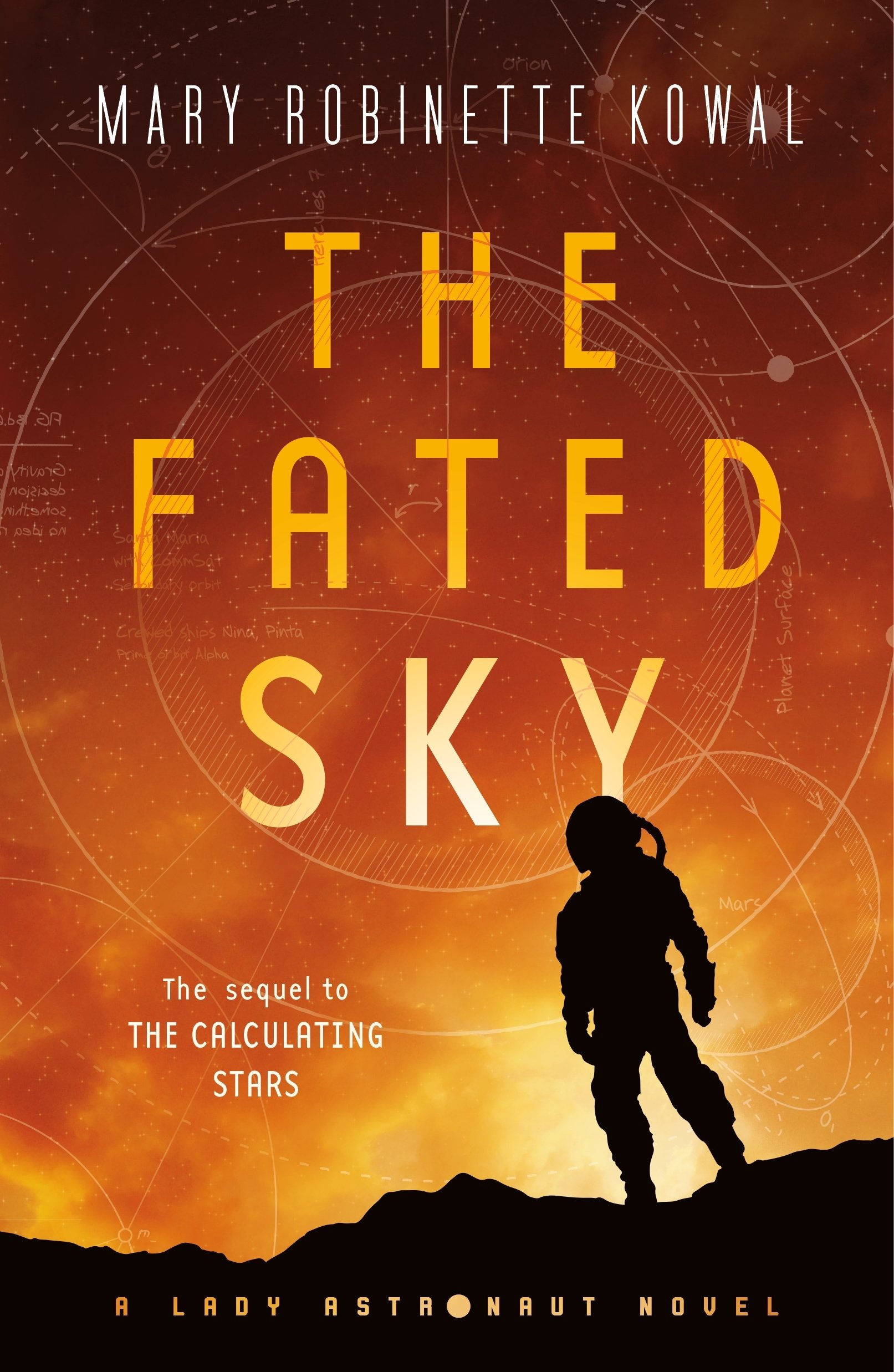
Image result for mary robinette kowal the fated sky
Mary Robinette Kowal, The Fated Sky

This is the sequel to MRK's The Calculating Stars, which I liked a good deal. I expected to like this one even more, given the buzz around the interwebs about it, but in fact I didn't enjoy it nearly as much. MRK goes heavy on the science detail here, which isn't bad exactly, and probably some people will like it. Lots of  minute detail about what an astronaut would say to another astronaut while establish orbit, data like that.

It's not bad that all this detail is included, but it left less room for developing characters and scenes between the characters. I could have used more of that and less of the authentic detailing of astronaut business.

I'm hoping for a third book, though -- get us to Mars. Show us what settling the planet might be like.


Laurie King, Califia's Daughters
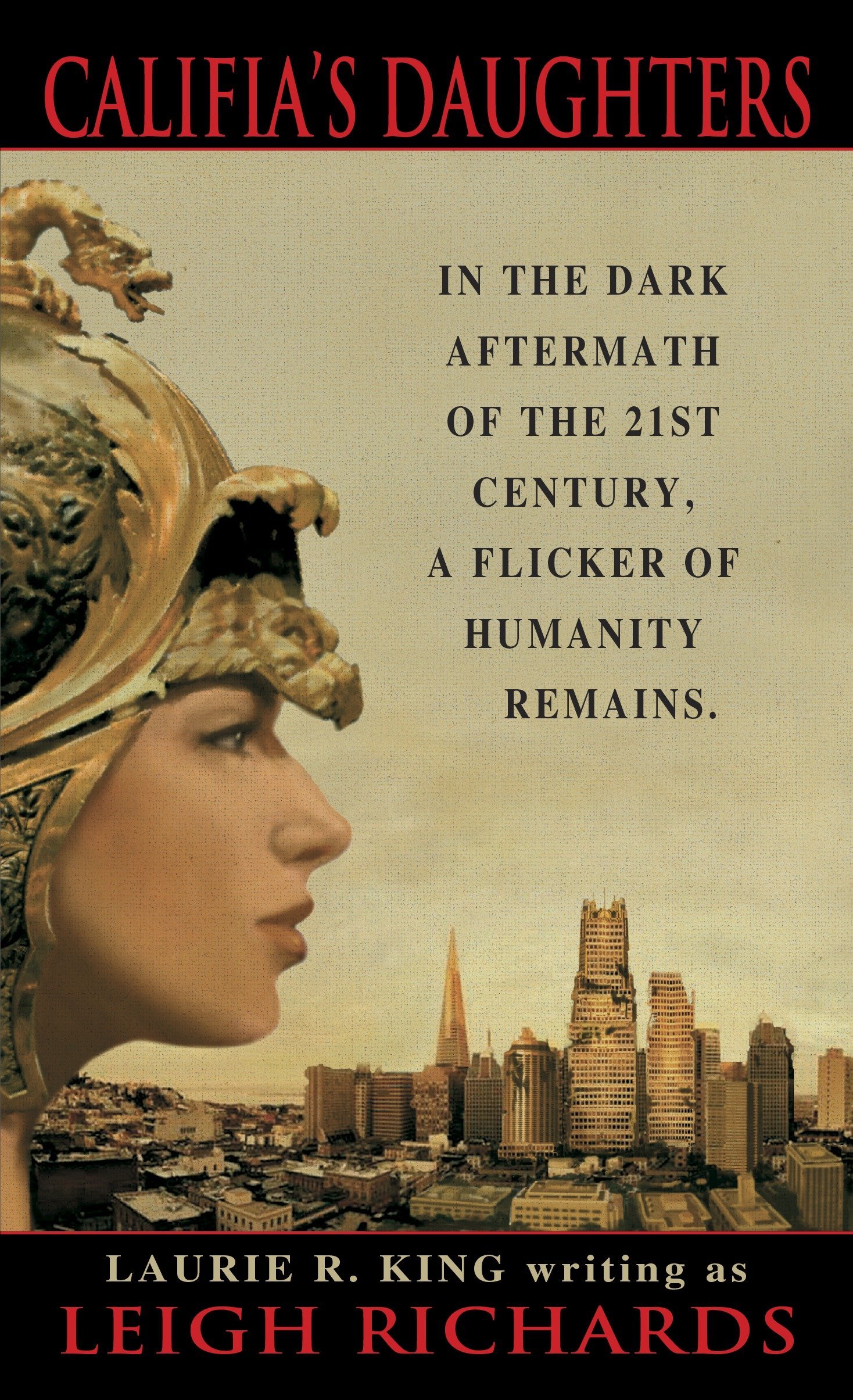
Image result for Laurie King Califia's daughters reviewLaurie King writes the Sherlock Holmes series I like, about the elderly Sherlock Holmes and his young woman partner, which starts with The Beekeeper's Apprentice. I do love that series, and if you haven't read it yet, it's so much fun.

This is an entirely different sort of book, and also a lot of fun -- though it gets grim in the middle, so be warned. It's about a post-apocalyptic world in which most men have died out, due to some sort of sex-linked virus. Women run the surviving world, and men are heavily protected (for their own good!). The main character is a young woman, Dian, who scouts and travels for her family, along with her pack of dogs. The best part is probably the relationship between Dian and these dogs. I'd read a sequel (there isn't one, sadly) just to spend more time with the dogs.

But it's also a great post-apocalyptic novel, for all y'all who (like me) love such things. Recommended!


John Varley, Irontown Blues

I love John Varley, especially his older books -- the stories and novels set in the Eight Worlds universe. So when this one showed up in my reccs, I bought it.

It's not a bad book. Very readable, as all Varley's books are. But it's just Steel Beach rehashed. Meh.


Sunday, November 23, 2025

What I'm Reading Now

Stella Hayward, The Good Boy

On her 30th birthday, a woman is granted a wish by her magical grandmother. This is a family tradition -- every grandmother gives every granddaughter a wish on their 30 birthday. But Genie, a bit drunk and traumatized by life, accidentally wishes her beloved dog was human -- and voila! 

This is an adorable book. The best part is Rory, the dog turned human who still acts and thinks like a dog. He's a golden retriever with his own traumatized past, and he's just great. (The trauma is off the page and kept non-explicit.) There's a romance (not with Rory) and it's fine and charming as well, but Rory is the best part. If you're looking for a well-written, charming read with a happy ending, this is your book.


Elly Griffith, The Frozen People

This is sort of science fiction, so I suppose I could have included it in one of my review columns. But it's really SF-ish, so I decided not to. It's a good book, mind you, and kept me interested all the way through -- this division in the English civil service handles "cold" cases (so cold they're frozen, get it), by which they mean cases that can only be handled by sending witnesses back through time to observe the murder. That's the only science-fictional part about the novel, the time travel. Otherwise it's a straight-up murder mystery.

The main plot concerns a powerful minister in the government, bruited as a possible Prime Minister some day, who is writing a book about his family history and wants to clear up the rumor that one of his great-great-grandfathers was a serial killer. So our main character is sent back to 1850 to act as a witness, and gets stuck there. Meanwhile in the future/present, the minister is murdered. Are the two connected?

I love time travel novels anyway, but this one is also very well done. Good writing, great characters, and a couple of cranky cats. If you like a little SF in your murder mystery, this might be worth picking up.


Helen DeWitt, The English Understand Wool

Helen DeWitt wrote one of my favorite books, The Last Samurai. This is a bit different, and much shorter (really a novella) but every bit as good. An 18 year old, raised in Morocco and various cities (Paris, London) by fabulously wealthy parents, reared by those parents to be spectacularly well-bred (never doing anything mauvais ton), suddenly learns that (a) her parents are not her parents and (b) she has very little money left indeed. What she does about it is one of the surprises of the book. 

As with Samurai, DeWitt plays with form and structure here. She does it very well. This book is a delight, and it's short enough to read in a few hours. 10/10, no notes.


Emma Straub, This Time Tomorrow

This one is also (sort of) science fiction/fantasy. A woman on the eve of her 40th birthday figures out how to return to her 16th birthday. There's a portal, sort of. But it will only ever take her back to that one day, her 16th birthday. She can, however, change things, which changes her life in the future. The one thing she keeps trying to change is the death of her father, who in the initial story is dying of lung cancer. The thematic arc is she has to learn to accept her father's death. 

It's not a bad book -- nice writing, and the characters are pretty well done. But it's the kind of SFF which people who don't read much SFF end up writing. (To her credit, Straub knows this and lampshades it in the book.) The science fiction convention that features heavily in the various timelines is really well done. Straub's father is Peter Straub, so that makes sense. 

The notion of 1996 being the ancient past kind sent me.


Harper Lee, The Land of Sweet Forever

I read this one so you won't have to. Lee is famous for having written every high school teacher's favorite book, To Kill a Mockingbird (I also loved this book as a kid) and then never publishing anything else. Because of this, it was a truism among the (male) writers in my MFA program that Truman Capote had "actually" written Mockingbird

Anyway, now that Lee is dead, her heirs are publishing her trunk novels and uncollected works, including Go Set a Watchman in 2015 and this collection of short stories and essays this year. It contains several short stories written when Lee first started writing, none of them terrible but none of them very good, and several pretty bad essays about nothing in particular. 

Only read this if you're a completist like me.


James Joyce, Portrait of the Artist as a Young Man

I read this as an undergraduate and again as a graduate student, so this is a re-read.

It's a lovely book. Joyce writes like an angel. Sadly, this one is overshadowed by his (incoherent and frankly overrated) later novels. If you actually like to read and don't just want to look like a hipster, this one and his short stories are where you should spent your time.


Thursday, July 09, 2020

Back into the Past


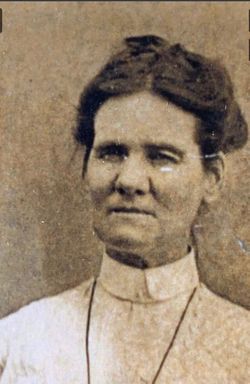
This is my great-great grandmother, Etta Hawkins.

Rosetta Rose “Etta” <I>Hawkins</I> Dewitt

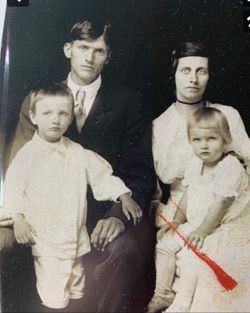
And this is my great-grandmother, Bertha Skaggs:

Bertha <I>Bell</I> Skaggs

That's a picture of my grandmother, Mae Skaggs, on her knee. Bertha died at 32, when my grandmother was twelve. Mae was sent to Indiana to live with a relative. Family history says the relative owned a "roadhouse," which is local parlance meant a whorehouse. I don't know how much of that is true.

The husband there, Ditchler Skaggs, looks quite a bit like my father and my second brother. Mae looks a bit like me when I was young, especially the white-blond hair and the suspicious glare.

What happened was, I couldn't remember my grandmother's name. So I hunted for her husband's obituary, and fell into the internet.

The trail ends with Ella -- or at least that's as far back as I can discover.


Thursday, December 27, 2018

Best Books of 2018


Lots of publications are putting out Best Books of 2018 lists.

Here's the NYTimes, for instance. I read several of these books, and while they were readable, they not only wouldn't make my list, they didn't make my list. That is, I read them, and decided not to write mini-reviews of them on my blog. For instance, The Perfect Nanny and Educated -- I read both of those. The Perfect Nanny struck me as yet another tool of the mommy wars, designed as it is to terrify mothers. And Educated, while it probably was eye-opening for some people, just seems like old news to those of us who live in Red States.

Likewise, Small Fry, also on the NYTimes list, while readable, hardly reaches 'best books' category. It's basically a tell-all about what a terrible parent Steve Jobs was. Which, wow, who would have guessed?

Frankly, after a couple of years of reading books that make the NYTimes recommended list, I'm starting to think whoever writes these lists doesn't actually like to read.

NPR's list is better, both because it allows you to sort for interest, and also because it actually has some good books on it. For instance, N. K. Jemisin's collection of short stories, How Long Til Black Future Month, and also Naomi Novik's Spinning Silver.

I've read almost nothing from this list, but I might now.

Anyway! My very own best of 2018 list. Mind you, these are just books I read (for the first time) in 2018. No doubt lots of better books are out there. And not all of these were actually published in 2018.

Helen DeWitt, The Last Samari: This is probably the best book I read this year. Highly recommended.

Laurie King, Califia's Daughters. Not published in 2018, but excellent. The dogs in this are great, if you like books with dogs in them.

Holly Black, The Cruel Prince. A portal fantasy, more or less, but really good. The sequel comes out in a few days, and I can't wait.

Charlotte Gordon, Romantic Outlaws. This looks at the life of Mary Wollstoncraft and Mary Shelley, kind of in tandem. Excellent read and an excellent book.

Carrie Vaughn, Bannerless. Y'all are going to start think I love post-apocalyptic books. Which, yeah.

Georgette Heyer, The Grand Sophy. Apparently this is the year I discovered Georgette Heyer. If you have always wished for more Jane Austen, Heyer is the writer for you.

John M. Barry, The Great Influenza. Goes into great and fascinating detail about the pandemic that killed so many people (a third of the world's population, by some estimates) in 1918.

Helene Wecker, The Golem and the Jinni. Fantasy, but the best sort of fantasy.

The Odyssey, trans. by Emily Wilson. You haven't read the Odyssey until you've read this translation.

Meg Elison, The Book of Etta. I love, love, love Meg Elison. Another post-apocalyptic book, by the way.

Helen McDonald, H is for Hawk. A memoir about the author's life with hawks. A wonderful book.

Those are my best reads. What about all y'all? Have you read anything good?

Oh! And don't forget that this book came out in 2018!


Thursday, February 14, 2019

What I've Been Reading


I found this book at our local library -- A Thousand Books to Read before You Die. Some of them I had read already, and some I had tried and don't want to read; but a lot of them I either hadn't read or passed over. This book gives brief explanations of the content of each book and why you might want to read it, along with notes about similar books, and so on.

As y'all know, I am a reading junkie. So far this book had provided me with ten or twelve new books to read, and I am only up to the D's. (It's alphabetical by author.) Here's a few of the books I've read, on the advice of James Mustich:


Samuel Butler, The Way of All Flesh

This was one of the books I'd picked up or thought about picking up maybe fifty times, but never actually looked inside. The title put me off. It made me thinking this would be one of those preachy religious stories.

And indeed there is some religion! But it is mainly the story of the Pontifex family, from the great-grandfather John down to the narrator's main interest, the great-grandson, Ernest. The narrator is Overton (if we learn his first name, I missed it) who knew Ernest's father, aunts, and uncles as a child, and becomes Ernest's godfather.

Overton watches Theobald, Ernest's father, grow up and grow into a small-minded, narcissistic, sadistic man, who both emotionally and physically abuses his oldest son. Most of the book concerns the effect of this abuse on Ernest, and how he recovers -- somewhat -- from that abuse.

The part of the book which is about religion mainly concerns the ways in which abusive people use religion to justify their abuse, and the difference between healthy and unhealthy attitudes toward religion. Butler also wants us to notice that making religion into an industry leads inevitably to abuse.

This is a very readable and thoughtful book. If you like 18th Century fiction (though technically it was published in 1903), give it a try.


E.M. Delafield, Diary of a Provincial Lady

I have no idea why I never read this one -- I actually remember checking it out of the library once. But it's a lot of fun.

It's just what it says on the tin -- a (slightly fictionalized) diary of a woman who lives in a small village in England in the 1930s, and her minor adventures and troubles. She's always overrunning her allowance (of course she has a trust fund), her children are ingenuous and troublesome, her husband is a sit-com husband.

Don't look for great depth, but if you want pure entertainment, this one is delightful.


Sigrid Nunez, The Friend

This one reminds me a bit of Helen DeWitt's The Last Samuri, in that it's a discursive book without a really strong plot line that is nonetheless compulsively readable.

That said, there are things that annoyed me about it, and I probably won't read it again.

The premise is that a woman has been "mentored" by one of her old professors all of her life, since she was in his creative writing class as an undergraduate. Now he has died, and she inherits his dog, a Great Dane named Apollo.

Like Helen McDonald's H is for Hawk, which I liked a lot, as you'll recall, lots of this book is not even about the plot, such as it is. Lots of it is about dogs, dogs in literature, dogs owned by famous people, dogs the narrator has known, dogs in the abstract and the specific. More of it is about her relationship with Apollo, who soon comes to replace the dead professor in her heart.

But some of it is about the professor, who slept with everyone, especially -- or perhaps exclusively -- with his students. In fact, he commits suicide, the narrator believes, because he grew too old to be pretty anymore, and his students stopped finding him sexy and started finding him offensive.

Though that is not quite how the narrator puts it, which is the part I don't like about this book. The narrator, who herself slept with the professor, clearly thinks professors should be allowed to sexually exploit their students, at least the young pretty women students, and that it is only this snowflake generation that takes offense at such things.

This is why their writing is so bad, she explains. They're too quick to take offense at everything, and that leads to them writing bland stories about nothing -- oh, except for one very brave young man in her writing class. True, he turns in bland stories entirely about men slaughtering each other. But later he confides in her that he does include women in the stories -- rape victims, and incest victims -- he just cuts them out before he shows the stories to the class, because, after all, his fellow students would just get offended and probably report him for sexual harassment if he included such scenes.

This little rant is at the very end of the book, and quite frankly such a cliched rant, straight from the propaganda machine of Turning Point USA, spoiled what had been an engaging and charming little book. I winced my way past it and finished the book, but I can't say I recommend it. Read H is for Hawk or The Last Samuri instead.


J. L. Carr, A Month in the Country.

This one I do recommend. It's also not very plot-driven -- it doesn't have much of a plot at all -- but the writing is beautiful, and Carr's ability to create characters is wonderful.

The plot, such as it is, is that a veteran of WWI, suffering from PTSD (or shell-shock, as they called it then), comes out to a village in England in 1920 to work on restoring a mural in a local church. He spends a summer (not a month) at this work, and gets entangled in the village culture and its people. He develops a crush on the vicar's wife, who reciprocates, but neither of them do more than flirt with one another. He builds a friendship with another WWI veteran, who is excavating a piece of land near the church. At the end of the summer, he returns to London.

That's it, so far as the plot is concerned. It's the wonderful writing and the narrators ruminations on art and war and existence that make this book stellar. It's very short, and I read it all in one gulp, staying up until 1:00 AM to do so, even though I had to get up at six for school.

Well worth it.