Showing posts with label What I'm Reading Now. Show all posts

Sunday, September 06, 2026

What I'm Reading Now


Ann Patchett, Whistler

I feel like I should read Patchett more than I do. Every time I pick up one of her books, I end up liking it a lot. Somehow I've never read straight through her publications as I do with other authors I like.

Anyway, this is one is good. It's about a woman, Daphne, in her fifties who runs across her former stepfather -- a man her mother was married to for a few months when Daphne was nine years old. They divorced shortly after Daphne and the stepfather were in an accident, and Daphne hasn't seen him since. But she has always remembered him and always loved him, and always blamed herself for the divorce.

Whistler is a horse, which neither Daphne nor anyone in her family has ever met. But his story turns out to be crucial to theirs. No spoilers otherwise.

I love this book a lot. It's also very short, but unlike many short books, it's exactly as long as it needs to be. 10/10, no notes.


Stephen Baxter, Evolution

I read all of this -- well, not every word, because I skimmed some bits where Baxter is just listing plants and various lifeforms in a given era -- so I guess I liked it. Baxter follows the genetic line of a specific human, from back before the Chicxulub Impact (when the ancestor was a small mammal) through 2034, when a volcano finishes destroying the current ecosystem, into the future when the sun explodes.

The main character is evolution and how it shapes one specific line of genetic material, with side excursions into other lines. It's accurate enough, especially as to how random and non-teleological evolution is, but since the main character is a mindless force of nature, it's a little hard to care what happens to any of the 'characters' in the story. It's an idea-not-character science fiction novel.

Baxter mentions but doesn't really deal with the accidental things that make up human/hominid consciousness and identity -- why we grieve, how we can be paralyzed with anxiety, addiction. Those would seem to be non-adaptive, and yet. I do like that he gives hominids these features, though, even if he never confronts them.

I read this one, but I don't think I'd read it again.


Stephen King, If It Bleeds

I think I had read this one before, but it's so hot I was looking for simple reads at the library. This is a collection of long short stories, three of them linked, and one containing our favorite character, Holly. The three linked stories, about a guy names Chuck, are honestly sort of dull, but the other stories are pretty good. Also, nothing too scary.

Worth reading if you just want something engaging that won't make you work hard.


Natasha Pulley, The Salt King

I actually listened to this one. I read it for a review with Asimov's, and loved it, of course. If you haven't yet read Pulley, this is a good one to start with. The audiobook, narrated by Luke R. Francis, is great. 

Like most of Pulley's books, we have a M/M romance at the center, though in this case it's a M/Supernatural Being relationship. And, as with most of Pulley's romance, it's mostly without any sort of physical passion. The two guys love each other, they just don't seem that interested in sex. 

Her previous book, The Mars House, was science-fictiony. This one is fantasy, which is what she normally writes; but not historical fantasy. Anyway, she's great, and this one is almost as good as my favorite book by her, The Kingdoms. Pulley is probably the only author who I buy in hardback *and* in audiobook.


Sunday, August 16, 2026

What I'm Reading Now

Still reading SF novels for reviews, but also a lot of Stephen Graham Jones. He's a horror writer, and usually I do not like horror, but he's really good. So far I've read these books by him:

(1) Mongrels, which is a werewolf novel about a family (father, brother and sister and the child of another sister) living in isolation -- that is, they don't know any other werewolves -- and trying to figure things out. The lore in this is great, as are the characters. The werewolves are poor/working class, which is not something you usually see. In general, most of Jones's characters are working class and poor, and lots of them are Indians, as is Jones.

(2) Buffalo Hunter Hunter, which is what it says on the tin, a hunter who hunts buffalo hunters during the latter half of the 19th Century. The hunter is an Blackfoot Indian who has watched his people being decimated by white invaders. He's also a vampire. Some great detail and lore here too.

(3) Don't Fear the Reaper. This is the second in a trilogy and I read it first, so it's pretty stand-alone. I have to go find the others now. Anyway, it's a book about a small town on a lake where slasher movies, or rather their plots, keep happening. Like a lot of Jones's work there's some meta-fiction happening here. I like the writing and the characters more than the story, as I am not into slasher movies. But the writing is good enough to keep you reading.

Also recently read:


Margaret Atwood, Book of Lives, a Memoir of Sorts

A sort of a memoir of Atwood's life, this is surprisingly fun, with a lot of droll bits. 

I say surprising because I've only read a couple books and stories by Atwood and they were all very bleak. Atwood addresses this in the memoir, referring to herself as a kind of Jekyll and Hyde creature, with dark stories to tell while she has lived cheery life and is (apparently) a cheerful person. Anyway, this is nearly 600 pages long and I enjoyed every page.


Richard Russo, Under the Falls

This is Russo's new book, and of course I read it. I will read anything by Richard Russo. I thought it would be a sequel to Empire Falls, or maybe set in the same universe, but no, it is stand alone. It's okay. A musician name Tyler returns to Stone Mountain, his hometown, which he fled at age 18, to give a benefit concert. He doesn't want to be there, and most of the very small town doesn't want him there. As he's fleeing town after the concert, his limo is run off the road by -- someone. That's the mystery in the plot.

The main flaw, probably, is length. Russo doesn't do well with short fiction, and this is a very short novel. Because it is so short, none of the characters except Tyler really get developed. I don't really believe that some of these characters would do the things they're supposed to be doing, but that's at least partly because the characters are so undeveloped. Tyler is about 30, also. Russo's writing about a kid who is my kid's age, except he's fabulously wealthy, and a rock star. The parts where Tyler is writing music, those work, but Tyler doesn't feel like a 30 year old living in 2025, or whenever this book is supposed to have taken place.

The novel is readable, but it is far from Russo's best novel. That one is Nobody's Fool, which is one of the ten perfect novels in the world. If you've never read Russo, start with that one, not this one.


Lee Smith, Silver Alert

Another very short novel, but unlike Russo's, very well done. Lee Smith wrote two of my favorite books, Fair and Tender Ladies and Saving Grace. She is really good at voice and place. Silver Alert is set in Florida, among the hyper-wealthy and the underclass who serve the wealthy. Even more characters than Russo's novel, but all brilliantly well-developed. One of the main characters is a guy whose wife has dementia -- he's got heaps of money, and (despite that, I started to say) is kind and likable and doomed. The other main character, a woman of about 20, is desperately poor, without a family or any real resources. Smith does a great job with this character as well.

Very short, an easy read, and despite the subject matter not at all depressing. 10/10, even though I wanted it to be longer.


D. E. Stevenson, The Young Clementina

I was delighted to find a Stevenson I had not yet read. This is not her best work, though. Written in the early 1930s, this one has the flaws of its time (casual racism, silliness about measuring people's heads to figure out how evolved they are, 'old maids' of 33) and the entire plot is based on a lie one character tells which destroys (almost destroys) the lives of everyone, including that character. This is not how people behave -- why just believe someone one person says? Why not go talk to one another?

It reminds me of a line in one of Mary Renault's books, where one character, puzzled, says to another, "I think you must have read a lot of silly books, or something."

Anyway, if you want to read Stevenson, this is not the book to start with, as engaging as I found the young Clementina. 


Dean Koontz, Going in the Dark

Did not finish. 

EDITED TO CORRECT: My kid DOES NOT LIKE KOONTZ, thank God. likes Koontz, so I've been trying to read one of his novels to see why. This one starts well, with some meta-fictional stuff and a promising plot (the four main characters all have amnesia around  some mysterious event in their young adulthood), but I could not get through the first half. Edited to add: The kid is furious that I slandered him on the blog. He has never even read Koontz.

One problem is how Koontz over-writes, taking three pages to tell you someone has blonde hair. The real flaw, though, is that Koontz does not understand people, so he writes people who behave in ways no human being would actually behave. The academic in this book is shown to us through the eyes of her son, who hates her, so I tried to go with the ridiculous portrayal of an academic. Of course she is unrealistically awful, the son hates her. That sort of thing. But even with that, I could not believe this character, or the way her son engages with her. Same for the rest of the characters. Koontz has been reading too much social media or something.

Koontz also lards in his kind of silly political opinions throughout, generally debunked nonsense about renewable energy, for example. I could wince past those if I could have believed the characters, or cared about what was (maybe?) happening to them. 

Edited to add: It is Clive Barker my kid likes. Maybe I will give him a try instead.

I have another Koontz book on hold at the library. I am giving him ONE MORE CHANCE.


Thursday, June 25, 2026

What I'm Reading Now

I'm reading a bunch of stuff to review for my SF book columns. My favorite part of writing these columns is that I get (1) free books and (b) early access to books. Like, for example, I have an advance copy of Audrey Niffenegger's sequel to The Time Traveler's Wife, which I have been waiting to read for literally decades. I also got Claire North's new book, and Laurie Frankel's new book, and --

ANYWAY.

Here's what I have been reading which aren't books for my review columns.


T.J. Klune, We Burned So Bright

A black hole is about to swallow the entire solar system, including Earth. What do you do with your last few weeks? Don and Rodney, who lost their emotionally troubled son some years earlier, make a road trip with his ashes, mourning his loss as well as the end of the world. Good writing here, but don't expect a happy ending.

I've been following Klune since his self-publishing days, and this was readable, but I can't really recommend it, unless you like to feel unhappy.


David Lodge, Changing Places

My favorite book by Lodge is Nice Work, a novel that follows two people, a university lecturer and a captain of industry as they "shadow" one another at work. This lets Lodge compare the two different worlds of the academy and the factory, which lets him have a lot of fun. Here, in this early novel -- which I am reading for the first time, because the public libraries I had access to before never had a copy -- he does something of the same, having a British professor change places with an American professor for six months of one academic year.

The novel was first published in 1975, and is set in 1969. But a lot of the circumstances it concerns itself with (student protests, people fleeing the US to seek abortions in the UK, problems with granting tenure) still apply, or I guess I should say apply again. Lodge seemed mostly to be fascinated with the difference in sexual mores in the two countries -- Britain being more staid, and California more sexually unbound. This part of the two societies is that which interested me least, frankly, and I wish he had spent more time on the differences in the academic worlds, or the different standards of living, or anything except who is fucking who. Though that was probably a big deal to Lodge, back in 1975, I don't know.

The book is also slightly meta, with interviews and news stories and film scripts scattered throughout; and the ending isn't an ending. The book just quits.

Anyway. Readable, but not as good as Nice Work.


Lauren Hough, Monster of a Land

In this non-fiction book, Hough refits a van into a camper of sorts, and with her dog Woody Guthrie sets off to follow in the footsteps of John Steinbeck, driving around America with her dog. I love road trip books, and books with dogs, and Travels with Charlie, so I snapped this one up.

As with Steinbeck's book, the real subject matter here is America and its people. Steinbeck ended up down in New Orleans, where the schools were being integrated and people were yelling hateful things at six year olds. But before that, he talked to a lot of people and saw a lot of the country. I especially enjoyed his time in Texas.

Hough, who starts in Texas, also talks to people. She ends up in Colorado, spending an isolated week at a lake and realizing she's lonely -- weird, because mostly she doesn't like people. As she travels through the high plains of the Dakotas, Montana, and a bit of Idaho, she meets a lot of people who are also living out of their vans or cars, and a couple who are walking around the country on foot. Student loans and a broken economy are the main culprits, though Hough admits that substance abuse plays its part. She also meets an Evangelical family (Idaho) where the kids are clearly being abused.

The dog is great, and Hough has some important points to make. I would have liked more of the trip, though, to be honest.

Fair warning, I had terrible nightmares after reading this one straight through, all in one day.


Lisa Unger, Darkness My Old Friend

This one is a mystery novel. I think I must have read another book in the series -- not this one -- because some of the characters and the setting seem familiar to me. It's set in The Hollow, a small community in upstate New York, with a small enough population that pretty much everyone knows everyone else.

It's a little too well written and complex to be a mystery novel, if you know what I mean. But there is a mystery: a missing woman in the past, and a missing woman in the present, plus a guy who used to be a cop and, having retired, is now taking care of the people who live around him. He's the one who acts as the private detective. It reminds me a little of Tana French, except her writing is more compelling.

The characters are well done. The pacing is a bit slow, and the mystery is pretty dark (hence the title, I guess). I liked it well enough that I've put a couple more of Unger's books on hold.


Rumer Godden, Greengage Summer

I can't decide if I like Godden or not. I read another one of her books a month or so ago, In This House of Brede, which I remember being entranced by. That's a story about a woman who joins a community of nuns, and how it goes for about a decade. I like hearing about worlds I will never enter, which was part of the attraction of that one.

This was follows four British children, ages four to sixteen, who end up stranded at a French hotel while their mother is in a French hospital with what sounds like sepsis. It's set six or seven years after the end of WWII, I think. In any case, there's a French orphan in his midteens whose mother apparently went with soldiers, leaving behind this kid and a younger half-sister, who the boy has lost track of.

There's quite a bit of French dialogue, which I enjoyed being able to read, and a bank robber, and French cuisine. A kind of a Lord of the Flies summer -- no one is taking care of any of the children here, not the British kids and not the French orphan. They have to take care of themselves, while bad things are clearly happening around them.

I enjoyed this, but it hasn't convinced me to read more Godden, which is a shame, because she wrote about a billion books. If I liked her a lot, that would give me reading  fodder for quite some time.


Leonora Chu, Little Soldiers: An American Boy, A Chinese School, and the Race to Achieve

Leonora Chu is a reporter, now based in Berlin. Back when she wrote this, she and her husband were living in Shanghai, where they decided to put their three-year-old son in a prestigious local preschool. The book is about Chinese schools, with that school as one example and less selective schools as others. Chu is appalled by the (to be fair, appalling) authoritarian nature of the pre-school, in which kids are manhandled into obedience, threatened and force-fed and shamed.

But she has to admit, after she looks at how Chinese children behave as they continue their schooling, that this appalling harshness leads to good results. At one point, she compares an American middle-school math class to a Chinese middle-school math class. Clearly, the Chinese students are better able to think about math, to solve problems, and to learn. But are they better at humanities? Well, yes. They're better at that too. Having been forced to memorize poems as very young children, they have a richer, deeper knowledge base to work with. Also, Chinese schools demand a lot from their students, and (sometimes) get it. 

Chu does show us what happens to the school children who can't do the work, or who come from bad schools, and how these kids have almost no chance to succeed in China. In particular, she writes about the children who grow up separate from their parents, raised by grandparents in the country while the parents work long hours in some city, or at transient labor. These children, whose grandparents are often illiterate, mostly do not do well in the Chinese system. I'm not sure that America does any better with its poor or difficult children though.

This is very readable, and Chu presents the evidence fairly. I think her thesis is that Chinese schools turn out children who are afraid to stand out or to defy authority. I'm not sure that's what her evidence shows, though. If you're interested in education, you might have a look at this one.


Sunday, April 19, 2026

What I'm Reading Now

Suzette Haden Elgin, Native Tongue

This is a science fiction novel from the 80s. The science is mainly linguistics. The conceit is that in the 1990s, the United States disenfranchises women, and strips them of most of their legal rights. The novel is set a few centuries after that event. 

In the world circa 2200, women have the legal status of children -- they cannot vote; they can work only with the written permission of their husband or other male guardian; the jobs they are allowed to do are limited; they cannot control any money they earn; they cannot own property; they can be locked in insane asylums if two male relatives/guardians say they should be.

A small number of "Lines," or extended families, specialize in linguistics and in translation, particularly translations of alien languages. (In Elgin's future, Earth has many, many off-world colonies, and has encountered dozens of alien species.) Children of the Lines learn alien languages from infancy, by being with representatives of specific alien lifeforms for several hours each day; they also learn two or three human languages each from infancy on, by being exposed to people speaking those languages; and they add several more languages as they grow to adolescence. They begin work at about ten, translating alien languages in negotiations, and translating Earth languages for the aliens. Both male and female children do this work, though it's a given among the men of the Lines that women don't actually understand the things they're translating. They're like a translation machine, or a wire that transmits signals.

Women have their own culture, as we learn, which the men know nothing about. They pass on knowledge of women's history, and -- in this first book -- are sculpting a woman's language which, they believe, will change reality.

The first novel in the trilogy is one of the best books I've read in months, though it is a bit dogged and didactic at times. The linguistic stuff is the best part. Elgin was a linguist, so I suppose that makes sense. 

The second book in the trilogy, The Judas Rose, is readable but less interesting that the first. I could not finish the last novel in the trilogy at all -- Earthsong takes as its conceit that the big problem with humans is their deep-seated need for violence, which I can agree with, but then posits that the way to fix this is to end hunger by means of Gregorian chants (or any music, really) which humans use the way plants use sunlight. It was one impossible thing too many for me, though the writing remains good.


Rachel Parris, Introducing Mrs. Collins

I really wanted to like this one more than I did, and the first half of it is pretty good. It's Pride and Prejudice from the point of view Charlotte Lucas, later Charlotte Collins. That's a great premise, and at first the novel goes well. I'm thinking, this is a novel about someone who marries without romance and makes a good life by doing so. That's an interesting topic. And in the first half, Parris seems to be retelling Mr. Collins pretty successfully, so that we can see how Charlotte can manage to have a good life with him.

But then Parris decides this has to be a romance with a capital R, and Charlotte falls in love with Colonel Fitzwilliam, blah blah blah. Kills Mr Collins off, now Charlotte is free to marry again. The last half of the book was a real disappointment. Sigh.


Edward Ashton, After the Fall

Edward Ashton wrote the Mickey 7 books, which were a lot of fun and compelling at times, so when I saw this in the new book section, I picked it up. It's a B+ science fiction novel. Aliens have invaded because humans are destroying (really, have destroyed) the ecosystem. They wipe out most humans and keep a few as breeding stock, which they have been breeding for neoteny, basically, cuteness, small stature, that sort of thing. (That's a semi-impossible thing, but Ashton does say the aliens are working on the genetic surgery level, not just breeding the way we bred dogs. So I got past it.) These humans are adopted as puppies, um, toddlers and small children, by the aliens and kept as pets. Any that age-out, get too old for adoption, are "put down," casually and butally.

There's a plot of sorts, in which John (one of the pet humans) locates some feral humans -- those who escaped execution when the aliens took the planet. But mainly this book is showing us the world of the aliens and how humans react to it. On the whole, Octavia Butler did it better.


The Selected Letters of Laura Ingall Wilder, Ed. William Anderson

Wilder was one of the formative authors of my childhood, so I enjoyed this. It's what it says on the tin, letters chosen by Anderson from the time of Wilder's young adulthood (when she and Almanzo leave South Dakota) onward. Anderson is not a reliable narrator, so I don't know how much he messed with the letters, nor what he left out. Still, I enjoyed reading this.


Sunday, February 15, 2026

What I'm Reading Now

Nancy McCabe, From Little House to Little Women

McCabe writes about her childhood and young adult reading, as well as a trips she and her daughter take to visit literary sites across the US and Canada, including the Little House museums.  I've never been to any of these museums except the one outside of Independence, with the reconstructed Little House on the Prairie; but I was reading most of the same books McCabe read in the same years she was reading them, so I enjoyed this memoir a great deal.

McCabe, her daughter, and various friends visit not only the Little House museums, but other museums, such as the Betsy-Tacy houses; the Anne of Green Gables museums on Prince Edwards Island; and the Alcott museum in Concord. Interspersed with the travel memoirs are reflections on McCabe's own life growing up in a religious conservative family in Kansas, focusing on her relationship with her mother, aunts, and female cousins; and how she evolves, both as a reader and person, as she comes of age and adopts her own daughter. Her memories of her family intertwine interestingly with her memories of the books she reads.

There's also some political musing about the various books -- feminism in Anne of Green Gables, as well as the conservative strictures that helped to create the Little House books (and even more so in the horrible television show). Both Wilder and her daughter were opposed to the New Deal created by FDR's administration, and these books (among other things) worked to create a narrative that explained why the New Deal, or any government aid, was a bad thing. (Never mind all the government aid Pa got, which among other things gave them their land in the Dakotas and sent Mary to college.) 

McCabe is the author of Vaulting Through Time, which I reviewed for Asimov's. It's also about mothers and daughters, aunts and cousins. Plus time travel! Both that novel and this memoir are wonderful reads.


Ron Chernow, Mark Twain

This is a biography of Mark Twain, and about a zillion pages long. Twain has never been one of my favorite writers, being very uneven, though of course I read Tom Sawyer about a million times as a kid. I've read Huck Finn a couple of times, and enjoyed the first half every time. I don't think I have ever made it through any of his other books, though bits of his diaries of Adam and Eve are funny. Anyway, I picked this one up off the new books shelf at the library and mostly enjoyed it. 

The second half of the book, when Twain's life is falling apart and his kids and wife are dying, is a bit depressing. Also he (and they) were constantly ill with things that antibiotics would cure, or which could have been prevented with vaccines. The baby son died from diphtheria, for instance. And they were always getting boils or dysentery; the youngest daughter had her life ruined by epilepsy. Life before modern medicine was awful. (On that topic!)

If you want to know what it was like to be a writer born before the Civil War who lived through a number of historical events and social changes, this book will tell it to you. Warning: Chernow doesn't try to gloss over the racism and misogyny of Twain's younger days. To his credit, Twain learned better and did better in his adulthood. 

Reading the biography made me want to give Twain's works another chance, and I might even do that.


Stephen Graham Jones, The Buffalo Hunter Hunter

This one was recommended to me by my kid, who likes horror novels. I do not like horror novels, but he said I would like this one. I did! 

It's about a Pikuni -- a Blackfoot -- Indian, Good Stabs, who becomes a vampire after attempting to kill a 500 year old vampire who immigrated to the US from Europe in the early 19th century. Good Stabs lives, as a vampire, through the destruction of his people and his culture by Europeans, attempting to fight back by killing Europeans, especially the Buffalo hunters who are wiping out the great herds that his people lived on.

Jones does interesting things with vampire lore, and he's a good writer. Trigger warning: lots of genocidal murder in the backstory. If you can handle that (I skimmed some parts), this is an engaging read. The ending left me a little underwhelmed, I'll admit.


Tuesday, January 06, 2026

What I'm Reading Now

A bunch of books by white straight guys. How did that happen?

Queen Esther, by John Irving

I saw this in the bookstore last time I was there, but I knew I could get it at the library so I didn't buy it. I'm glad I didn't. I'm afraid John Irving wrote one kind of interesting book (The World According to Garp) and since then has just been writing it over and over. This is just Garp one more time. A fatherless boy raised by feminists who wrestles in high school at a New England prep school wants to be a writer, goes to Vienna, encounters a German shepherd dog and some LGBT people, meets women with huge breasts, so on and so on. This one includes Jews and Israel and some indirect commentary on the situation in Gaza, but other than that, nothing here is new.

Content Warning: Irving's weirdness surrounding sexuality and people's genitals is very much present in this one. At least this time no one has sex with the dog.

Garp was formative to me as a writer and John Irving is always readable, but get this from your library if you're going to read it at all.


Spark, John Twelve Hawks

To be fair, I don't know if Twelve Hawks is a white straight guy. He's said he's not Native American, though, despite the name, which is a pseudonym. He could be a brown guy who isn't Native American. He writes under the pen name and claims no one in his family or community knows he publishes these books, which strikes me as unlikely -- what do they think he's doing, all those hours locked up with his computer? -- but I don't know his circumstances, so maybe.

Anyway! I did enjoy this one, mainly because of the voice of the main character (it's told from his point of view). Jake had a major head injury some time before the book opens, and suffers from Cotard's Syndrome. That is, he believes that he is dead. He is, he tells us in the book, a "spark" living in a "shell." 

Because of the syndrome, he feels no emotions about anything -- his mother, as he explains, and a empty soda can in the gutter are equal in his mind. This is not entirely true, as we learn, progressing through the novel. Jake does care about dogs. But otherwise -- 

Also because of this syndrome, he makes an excellent contract killer, and is earning a great deal of money, as the novel opens, doing this -- enough to pay his rent and his hospital bills, and to have plenty left over. He's not afraid of death (fear being an emotion) but it is convenient not to be homeless, and murdering strangers in order to pay for things is preferable to working a nine to five job.

The strange worldview of Jake is the best part of the novel, but as it is set in the near future, there's also a science fictional element, with a great deal to say about surveillance culture and the on-going stripping away of legal rights from members of the general population. Worth reading, and less depressing than you might expect. Warning: there are some scenes of animal abuse and human torture.


QNTM, There is No Antimemetics Division

I know QNTM is a white guy (his picture is in the back of the book) and that QNTM is a pseudonym for Sam Hughes (via Wikipedia.) I don't know much else about him, so I suppose he could be some flavor of LGBTQ. He's also the guy who invented Absurdle , a spinoff of Wordle in which the word changes with every guess you make, while "still remaining true to previous hints."

Anyway! I'm not sure I exactly liked this book, which is very disturbing, but I read it straight through. It's about "antimemes." Memes are cultural ideas, symbols, things you remember, possibly even against your will. They're like religions and cults (but I repeat myself), earworms, gestures, even phrases. Memetics is the study of memes. Antimemetics are things you can't remember. Like, literally can't. In QNTM's book, some of these are predators on humans, but since we can't remember them -- or anything they do -- they're difficult to fight.

The Antimemetics division fights the antimemes, except without certain specific drugs they can't remember the antimemes either. Sometimes even with the drugs, they can't remember them. Some antimemes can eat the memory of everything you know, your whole life, the languages you learned, your family, your skills, yourself. This is a bit like Alzheimers, I guess, which might be why it disturbed me so much.

We follow the chief of the Antimemetics division and her husband through a world-ending antimemetic attack, with a number of flashbacks and side quests. I'm not sure the ending is happy. I guess it's sort of happy.

Anyway, a very readable but not a comfortable read.


Sunday, November 23, 2025

What I'm Reading Now

Stella Hayward, The Good Boy

On her 30th birthday, a woman is granted a wish by her magical grandmother. This is a family tradition -- every grandmother gives every granddaughter a wish on their 30 birthday. But Genie, a bit drunk and traumatized by life, accidentally wishes her beloved dog was human -- and voila! 

This is an adorable book. The best part is Rory, the dog turned human who still acts and thinks like a dog. He's a golden retriever with his own traumatized past, and he's just great. (The trauma is off the page and kept non-explicit.) There's a romance (not with Rory) and it's fine and charming as well, but Rory is the best part. If you're looking for a well-written, charming read with a happy ending, this is your book.


Elly Griffith, The Frozen People

This is sort of science fiction, so I suppose I could have included it in one of my review columns. But it's really SF-ish, so I decided not to. It's a good book, mind you, and kept me interested all the way through -- this division in the English civil service handles "cold" cases (so cold they're frozen, get it), by which they mean cases that can only be handled by sending witnesses back through time to observe the murder. That's the only science-fictional part about the novel, the time travel. Otherwise it's a straight-up murder mystery.

The main plot concerns a powerful minister in the government, bruited as a possible Prime Minister some day, who is writing a book about his family history and wants to clear up the rumor that one of his great-great-grandfathers was a serial killer. So our main character is sent back to 1850 to act as a witness, and gets stuck there. Meanwhile in the future/present, the minister is murdered. Are the two connected?

I love time travel novels anyway, but this one is also very well done. Good writing, great characters, and a couple of cranky cats. If you like a little SF in your murder mystery, this might be worth picking up.


Helen DeWitt, The English Understand Wool

Helen DeWitt wrote one of my favorite books, The Last Samurai. This is a bit different, and much shorter (really a novella) but every bit as good. An 18 year old, raised in Morocco and various cities (Paris, London) by fabulously wealthy parents, reared by those parents to be spectacularly well-bred (never doing anything mauvais ton), suddenly learns that (a) her parents are not her parents and (b) she has very little money left indeed. What she does about it is one of the surprises of the book. 

As with Samurai, DeWitt plays with form and structure here. She does it very well. This book is a delight, and it's short enough to read in a few hours. 10/10, no notes.


Emma Straub, This Time Tomorrow

This one is also (sort of) science fiction/fantasy. A woman on the eve of her 40th birthday figures out how to return to her 16th birthday. There's a portal, sort of. But it will only ever take her back to that one day, her 16th birthday. She can, however, change things, which changes her life in the future. The one thing she keeps trying to change is the death of her father, who in the initial story is dying of lung cancer. The thematic arc is she has to learn to accept her father's death. 

It's not a bad book -- nice writing, and the characters are pretty well done. But it's the kind of SFF which people who don't read much SFF end up writing. (To her credit, Straub knows this and lampshades it in the book.) The science fiction convention that features heavily in the various timelines is really well done. Straub's father is Peter Straub, so that makes sense. 

The notion of 1996 being the ancient past kind sent me.


Harper Lee, The Land of Sweet Forever

I read this one so you won't have to. Lee is famous for having written every high school teacher's favorite book, To Kill a Mockingbird (I also loved this book as a kid) and then never publishing anything else. Because of this, it was a truism among the (male) writers in my MFA program that Truman Capote had "actually" written Mockingbird

Anyway, now that Lee is dead, her heirs are publishing her trunk novels and uncollected works, including Go Set a Watchman in 2015 and this collection of short stories and essays this year. It contains several short stories written when Lee first started writing, none of them terrible but none of them very good, and several pretty bad essays about nothing in particular. 

Only read this if you're a completist like me.


James Joyce, Portrait of the Artist as a Young Man

I read this as an undergraduate and again as a graduate student, so this is a re-read.

It's a lovely book. Joyce writes like an angel. Sadly, this one is overshadowed by his (incoherent and frankly overrated) later novels. If you actually like to read and don't just want to look like a hipster, this one and his short stories are where you should spent your time.


Thursday, February 20, 2025

What I'm Reading Now

Audrey Schulman, Theory of Bastards

This is the best book I've read in awhile -- one of those stay-up-until-2:00-in-the-morning books. Told mainly from the point of view of a MacArthur Fellow who studies sexual behavior in primates (mostly human, but in the book it's bonobos), it's the story of a couple months in her life, with frequent flashbacks to her past. She's disabled, which has made her, interestingly, a better scientist; and she's living just before and during climate collapse, which she ignores as assiduously as most people do, right up until she can't.

There are some great characters in this, not all of them human, and the writing is great. Five stars, can't wait to read more by Schulman. (Recommended on Jo Walton's reading list, where I get a lot of my favorite reads; and like her I have some nitpicks about the actual science, but by the time I was thirty pages in I didn't care, I would follow Schulman anywhere.)


Kathleen Flynn, The Jane Austen Project

Time travel and Jane Austen -- obviously a book written exactly for me! And I do like it a lot. A doctor and Jane Austen scholar (that's one character) travels back in time with an actor and a Jane Austen scholar (the other character) to meet and research Jane Austen and to get (if they can) the letters that Austen's sister famously burned upon her death, as well a completed copy of the Watsons.

Things don't go quite as planned, obviously; but what really works in this novel is Flynn's ability to give us the world of 1815, and the Austen family. There's a romance between the two Austen scholars which is pretty well done. I kind of wanted a different ending, but it works for the novel. Recommend for all fans of Austen and time travel.


Gary Groner, The Way

Also a post-collapse/post-apocalyptic novel. Here, a virus has wiped out most of the world's population and remains endemic, killing almost everyone as they age into their forties. Will, one of the few people to survive past fifty, is tasked with taking information about a possible cure from Colorado (where he is the only survivor of a bunch of Buddhist living in a retreat in the mountains) to San Francisco, where a group of scientists still have the technology to do something with the information.

We can gloss over that bit, since the cure is just a McGuffin. What we have here is a travel quest through a world where most of the surviving population are feral children and adolescents, and where any towns or groups of young adults have to try to survive in a lawless landscape. Will struggles to maintain his non-violent worldview, which keeps him from killing or harming anyone or anything, while knowing he benefits from violence done by others. Also, he has two animal companions, a crow and a cat, with whom he can talk. This is either magical realism or some side effect of the virus, I was never sure which.

Anyway, compelling story and great characters. Even an acceptable ending. I liked this one a lot.


Ray Nayler, The Mountain in the Sea

I finally read this one, which everyone was raving about a couple years ago. I love Nayler's short fiction and his novellas, but I could never get past the first ten pages of this one. Finally I just kept reading, forcing myself through the first hundred pages, and it did get better. It's still not my favorite by Nayler. I think he works better with shorter fiction.
Anyway, this is another apres le collapse /apocalyptical novel, and it's about that -- how humans are destroying the ecosystem -- but also about some human fighting to preserve a small bit of that ecosystem, as well as a scientist who is studying octopuses in that preserve. The last half is pretty good, but I don't know if it's worth slogging through the first half to get there.


Wednesday, February 21, 2024

Re-Reading Lynne Sharon Schwartz, Disturbances in the Field

This is a book I first read years ago, I think in the 1990s? I've re-read it every so often. (In fact there is a bookmark in it of one of the kid's early drawings, dated 2003.) Anyway, I wanted to share this passage:

I watched Victor Rowe. In his light eyes was the most critical expression I had ever seen. Anyone who scanned the world that way, I thought, must be the most clever, the most supercilious. And if he knew how striking he was, it would be so much the worse. He was tall and rangy and moved with the coordinated, weird grace of a giraffe. 

This is the man she will marry, but the book is not about romance or any sort of love affair -- though she and Victor do seem to love each other. She's a pianist and he's an artist and they have four children and live in Manhattan in the 1980s, and it's about their lives in college and their lives in the 1960s and 1970s, and their friends and families and one terrible event that smashes into that life. It's not about the terrible event, either, exactly, it's about the life that collides with that event. Oh, and Greek philosophy. It's also about Greek philosophy.

I was in graduate school when I read this book, and just after I finished it I saw it on the desk of a fellow grad student. "Oh, I love that book," I said (which parenthetically is the worst thing you can say about any book if you are a graduate student in English).

"Did you," she said. "I got a little bored with all the philosophy."

I was a young grad student and had no rebuttal. What I should have said was, but the philosophy is the most essential part of the book! I should have said, but what are you reading it for, then? The fucking daily life in Manhattan?

(To be clear: I love the daily life in Manhattan part. 1960 through 1980 in New York was such a different world, this might as well be science fiction.)

What I did say was, "That was my favorite part."

We stared at each other as though across an abyss. I don't know what became of her; I don't even remember her name. I think maybe she was a translator? Or a New Critic. Who knows.

Bored with all the philosophy indeed.

Anyway, you should definitely read Disturbances in the Field, though I haven't like any other of Schwartz's books nearly as much. 


Thursday, February 15, 2024

What I'm Reading Now

Jane Gardam, A Long Way from Verona, Old Filth, The Hollow Land, Faith Fox

To be honest, Jane Gardam is mostly what I am reading now. I discovered her via Dame Eleanor Hull's blog, and although my library only had two hard copies (my preferred method of reading) they have bunches of e-copies, and I am working my way through them. 

Gardam is a delight -- lucid, lively writing, and a huge backlist, so she can keep my reading appetite satisfied for awhile.  

A Long Way from Verona, which is about an adolescent girl, Jessica, in England during WWII, whose father has quit being a headmaster to become a curate in Yorkshire (the vilest part of England, according to Jessica's mother). It's Jessica's voice that carries this one -- she's tough, hilarious, and unstoppable. This is supposed to be a children's book, but as an adult, I loved it.

Old Filth is one of her adult novels, about a British judge (retired) whose wife has just died. The novel moves back and forth in time, from the death of Filth's mother at his birth (in Malaysia), after which his father neglects him entirely until he is five, and then sends him home to England to board with a woman who keeps "Raj orphans," which is to say children whose parents send them back to England while remaining in East Asia or India themselves. Apparently Gardam bases this part of the story on Rudyard Kipling's life, which honestly explains a lot about Kipling. Filth stands for Failed in London, Try Hong Kong, by the way. Apparently this is a trilogy, but I haven't gotten ahold of the others yet.

Hollow Land is a collection of what read almost like short stories, set in Cumbria, which is apparently part of the Lake District, tracking the lives of two families and their general community from the 1970s until 2015, which makes it technically science fiction, since it was originally published in 1981. Gardam's 2015 is a much more interesting and appealing one than the one we have, I'll add.

I've just started Faith Fox, and I love it to bits already.

Highly recommended.


Carolyn See, The Handyman

Carolyn See was also recommended on Dame Eleanor Hull's blog. This is the only one the library had in hard copy; I'll look for e-copies next, because See is also great. The Handyman is about a guy who wants to be an artist, but can't seem to find his material. It's kind of how he finds his material, but mostly about how he becomes a humane human and how he learns about community. I could not stop reading this one; I read it all in one day, finishing about two in the morning even though I had to be up at six the next day. I'm very much looking forward to reading all her other books.


J. G. Ballard, Empire of the Sun

Someone left this book on the leave-one-take-one shelf in the English department hallway, and since I'd wanted to read it since seeing the movie, I took it. I didn't leave one, but I took several of my excess books the next day, very penitently. 

This one, as you probably know, is about a British boy who gets separated from his parents in China during the early days of WWII, and spends the war interned in various camps, surviving by attaching himself to adults who both exploit and look after him. Ballard himself was interned in China during the war, though I am pretty sure he was with his parents the whole time.

This is an interesting but not great book. If you liked the movie, it's worth looking at; but I don't know that I'll seek out more Ballard. Apparently he wrote science fiction, but I've never read or even seen any SF books by him. Wikipedia tells me he wrote a SF book called Crash, which the movie of the same name is based on, but I haven't seen that movie either.


Friday, August 18, 2023

What I'm Reading Now

Ann Patchett, Tom Lake

This is the best book I've read in a long while. Patchett is hit or miss for me -- I've really liked a couple of her books, while others bored me horrifically. I almost didn't check this one out when I saw it at the library. "Oh, Patchett again. Is she still writing?"

She is, and this book is a masterpiece. Patchett tells the story of a summer on a cherry farm in the early months of the pandemic, when the three daughters of the farm come home to stay with their parents and help them pick the sweet cherry crop. (All the details about cherry picking ring true, though I don't think Patchett lives on a cherry farm.) The daughters want the mother, Lara, to tell them the story of how she dated a guy who later became America's biggest actor. So she does, her story interweaving with the story of cherry-picking and their lives during the pandemic.

Lara met Peter Duke (the actor) when they were both in a summer theater production of Our Town, and the entire novel is filled with echoes of that play, as well as Chekhov's The Cherry Orchard, while remaining a story about its own characters. The plot, such as it is, revolves around Lara's love first for Duke and then for her present husband, and how that came about; and about the oldest daughter, who is in love with the neighbor boy (just like in Our Town, yes) and what happens with that. The plot is fine, but the wonderful structure and writing of this book are just sublime. I kept stopping to read paragraphs over again, because they were so wonderful. Not showily written -- this is not a "lush" book -- but just perfect.

Read this one. It's amazing.

Thorton Wilder, Our Town

This is one of the first plays I ever saw performed, as an adolescent in New Orleans, and one I read several times during my teen years. I re-read it because of Patchett's novel, of course. I remembered almost nothing about it, while everything felt familiar. I do remember Mrs. Gibbs saying, "Once in your life before you die you ought to see a country where they don't talk in English," a line that has stuck with me for all the intervening years. But I think I missed the part where Wilder tells us she never went to Paris -- she leaves the money to her Emily and George, who spend it on a concrete watering trough for their cattle. Which, yikes.

It's a good play. But don't watch the 1977 version on YouTube, that's my advice.


Liane Moriarty, What Alice Forgot

This is a re-read, my favorite of Moriarty's books. Alice hits her head in the gym and forgets the last ten years of her life, the time during which she gave birth to three kids, stopped loving her husband, became an exercise fanatic, and lost her best friend, traumatically. She thinks she's still 29 year old Alice, a goofy, soft, whimsical woman, pregnant with her first child and madly in love with her husband, who in her memories is a wonderful guy. What happens when her memory returns? It's an engaging book, like most of Moriarty's novels, with great characters. I liked it just as much on the re-read as I did the first time I read it.


Martha Wells, The Murderbot Diaries

I'm re-reading all these for an essay I plan to write. They're great. Murderbot is a "construct," which is to say a kind of half-human/half-robot Security Unit, SecUnit, as these constructs are often called. It's an entirely ungendered being (it finds sex boring) who underwent a traumatic event, which it mostly can't remember, and which caused it to "split" from its previous self, hacking its governor module and becoming, technically, a rogue unit. What Wells does in these texts is really interesting. Clearly I'll have more to say about this in the essay, but meanwhile you can also just read these for fun.


Friday, July 28, 2023

What I'm Reading Now

Richard Russo, Somebody's Fool 

This is a sequel to Nobody's Fool, my favorite Russo book, and Everybody's Fool, which I didn't like as much. This one is better! It's set maybe 25 years after Nobody's Fool. Sully is dead, but he haunts both the town and his son, Peter, who fears he is becoming Sully. Those of you who are Russo fans remember that Peter, while he kept his oldest son Will, more or less abandoned his two younger sons, who were raised by their impoverished mother and a series of abusive boyfriends. Well, now one of those sons, Whacker, has shown up on Peter's doorstep. We also see what's going on with Tina, Janey's kid, and my favorite character, Rub.

There's also a murder mystery, and Russo finally takes a look at race. (He kind of did in the previous two books, but the use of the n-word in the first was treated as a joke, and though we saw Black people in the second book, their race was treated as incidental, not as something that might affect their lives.) I like this one better than anything Russo has written in the last decade or so, though Nobody's Fool remains his best book.


Adrian Tchaikovsky, The Doors of Eden

I've been hearing about Tchaikovsky's Children of Time series on the SF blogs for some time, but our library didn't have the series. It did have this one, though, and when I was hopelessly trawling the shelves for something new to read, I picked it up. 

I see why people like him -- he's an engaging writer with a compelling storyline and some plot surprises. I read the whole thing, which was like a billion pages long (597, in fact), and enjoyed everything but the last fifty pages or so. That's the part where Tchaikovsky had to draw together all his plot lines, and he does, mind you, but at this point he has so many characters that he can't really spend enough time with each one, and it all starts to blur together. Also, he doesn't really do much to develop the characters. He's all about the ideas, which is a feature of hard science fiction, to be fair. 

Still, if you like hard science fiction plus multiverse fiction, this is definitely worth reading. If he were in my workshop, I'd advise him to cut about six characters, but I liked it well enough that I'll probably try the other Tchaikovsky novel the library has in its holdings.


Natasha Pulley, The Lost Future of Pepperharrow

This is a re-read, because the library won't get new books fast enough, and when they do, they are mostly books I don't want to read. Anyway, I love Natasha Pulley. This is the second book about Mori and Thaniel. If you like KJ Charles, you'd probably like these books. Mori remembers the future, the way the rest of us remember the past, but he also remembers all possible futures, and can do things to make specific futures more likely. In this one, Mori pulls hundreds of strings for decades in order to have one specific thing happen, which I won't reveal, since spoilers.

Set in 19th century Japan for the most part, it's full of wonderful details about Japanese life as seen, mostly, through the eyes of Thaniel, but also through the eyes of Takiko Pepperharrow, Mori's wife. I've probably read this book six times now, and I love it more each time.


Ellen Gilchrist, I, Rhoda Manning, Go Hunting with my Daddy

Gilchrist lived in New Orleans and attended the workshop at the University of Arkansas, just as I did, so in a lot of ways it seems like I ought to like her more. Every now and then I check a book of hers out of the library to read and try to decide what it is about her writing that hits me wrong. She's a very readable writer, and I am frequently caught up in her fiction. So it's not that.

This one, frankly, got a little boring. Most of Gilchrist's fiction is autobiographical, and it's all about how wonderful her father was and how special she herself is. That might be what irks me, because she's not special, just rich, which she has mistaken for being special. Anyway, this is a collection of stories about how wonderful her father is and how wonderful she herself is. A little of that goes a long way. Also, there's a lot of panic about teenagers smoking marijuana in the 1970s, which comes off as ludicrous, frankly. Oh no, teens smoke dope! Catastrophe! And there's an incoherent story about Middle Eastern men being terrorists. I'm not sure what to make of that one. Maybe Gilchrist trying to write about something other than her daddy? (Now I'm being mean.)

This one was from 2002. I might try one from later in her career -- I stopped reading her sometime in the late 1990s, as I recall -- and see if she gets any better. The library seems to have every single word she's ever written, so.


Sunday, June 04, 2023

What I'm Reading Now

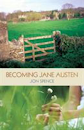
Jon Spence, Becoming Jane Austen

This is non-fiction, a kind of mixed historical and biography of Austen's family, her time, and her literary development. I love Austen, so I don't know how I missed this one. It was published in 2003 and apparently they've made a movie of it, though I can't see how. (Google tells me it's only about one specific year of Austen's life.) Anyway, it's very well written and a wonderful read for any of you, like me, who's a sucker for anything Austen. Spence's sources are the Austen family letters and papers, as well as some standard reference books.  


Jane, Aline Brosh McKenna and Ramon K. Perez

Not about Jane Austen! This is a graphic novel which retells Jane Eyre, moving it to contemporary New York City. It leaves out much of the novel, as it would have to, and recasts the rest. The center of the story is the romance between Jane and Mr. Rochester. The wife in the attic is made more benign, and the racism is eliminated. The art is beautiful. I liked it, but if you want Jane Eyre, read Jane Eyre.


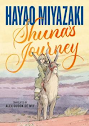
Hayao Miyazaki, Shuna's Journey

Miyazaki you will already know, as the founder of Studio Ghibli and the genius behind such works as Spirited Away and My Neighbor Totoro. This is, I think, his first manga. It has his trademark mythic nature, and lovely art. Shuna is the prince of a remote city, deep in a mountain canyon, where there is not quite enough food for his people and their work animals to survive. When he rescues a dying man lost in the mountains, the man tells him of a golden grain (barley, as it turns out) which will grow and feed everyone. Shuna sets out to find this grain, traveling through a depopulated world filled with wonders and monsters, war and slavers. This is aimed, I think, at young adolescents, but I enjoyed it.


Susanna Moore, The Lost Wife

This is a very short novel about a woman, Sarah, who runs away from an abusive husband and ends up married to a doctor in Minnesota, before and during the Sioux uprising there. If you're not familiar with the uprising, the Sioux people made peace with the US just before the Civil War, and were given a small reservation to live on. They were also promised a yearly payment, with which they could buy food and clothing. In 1862, with so much of the US budget going to fight the war against traitors defending slavery, the US did not make this payment. There had been a bad winter, and overhunting by settlers, so that at this point the Sioux were starving. They asked the paymaster to give them food from his stores on credit, and he told them to eat shit if they were hungry. Some of the young men rose up and began slaughtering settlers and raiding their farms. The US government, which could not pay the annuities due to the starving Sioux and Dakota peoples, could and did send an army to put them down. 2000 Sioux were captured, 303 were condemned to death, and 38 were actually executed -- the largest mass execution in US history.

This novel gives us the uprising from the point of view of Sarah, a white woman, who is sympathetic to the Sioux, many of whom she has befriended; but also terrified for herself and her two children. The novel is well written, though possibly misfocused? About half of it dwells on Sarah's early life and her escape from the abusive husband, and it's a really short novel. The uprising and its events overpower the first half of the book. I liked it, but I would have liked it better if it had all been about Sarah's life with her doctor husband after she moves with him to the reservation and what happens during the uprising.


Roger Zelazny, Doorways in the Sand

This is a re-read. A perpetual student (he's been left a generous endowment from an uncle, but only so long as he remains a full-time student, so he's been an undergraduate for 13 years) runs into trouble when a friend of his steals what he thinks is a copy of an intergalactic artifact, only to have to turn out to be the real thing. 

I first read this when I was about fifteen, and re-read it a couple of times after that. So it's been decades since I read it. It holds up okay, though the sexism is pretty appalling. I still love the aliens who disguise themselves as kangaroos and wombats, and the alien that looks like an artifact but is actually a virus. Zelazny likes to get poetic, but the writing is generally good nonetheless. Read this one only if you like 1970s era science fiction.

Wednesday, May 17, 2023

What I'm Reading Now

Josephine Tey, Brat Farrar, A Shilling for Candles

These are rereads. I love Tey's books, which are British mysteries from that sweet spot of British mystery writing, the 1930s through the 1950s. A Shilling for Candles is her first novel, and she's already a pro. It's one of her Inspector Grand novels. Brat Farrar is about a British upper class family in which the heir was killed/went missing as a child of 13, except now that son returns. Or does he? (No, it's an imposter, which is not a spoiler, since the novel reveals that he's an imposter at the very beginning.) The mystery here is what happened to the missing child; but as always with Tey, the delight is in the setting and the characters. I recommend these highly if you want a 'nice' book to read.


K.J. Charles, The Secret Lives of Country Gentlemen

I like Charles's books a lot, but they are mostly e-books, and I really like real books, especially for reading at night when I am tired. This is the first print-copy of Charles my library has purchased, so I snapped it up. It borrows a bit of its setting from that Georgette Heyer novel about smugglers, but it's a fresh take. The young heir to a smuggler's den strikes up a romance with the young baronet, and complications ensue. Charles does this kind of romance very well. I also love the smuggler's dialect, of course. Dialects are my jam. This one has a sequel coming out -- a sort of sequel, it looks like it's set about ten years in the future, and concerns a minor character in the first novel. Anyway, a ripping yarn. I need to seek out more K.J. Charles.


Jonathon Kennedy, Pathogenesis: a History of the World in Eight Plagues

Kennedy's thesis is that communicable diseases did as much or more to shape the world than any human agency, specifically by killing off great swaths of people whenever two previous isolate groups came into contact -- as, for instance, when h. sapiens met up with h. neanderthalenis; or when the Roman empire was struck by the bubonic plague due to trading and invasion from various points, leading to the the fall of the empire. And, of course, the Native American populations, both in North and South American, were nearly wiped out by diseases brought with explorers and colonists, which allowed European populations free access to the continents. In other places, Kennedy argues, such as Africa, where the local population infected the invading population (Europeans, mostly), such conquests did not happen as easily. He also cites Haiti, where a plague of yellow fever kept the French from taking back the country after the slave uprising. The slaves, many imported from Africa, were far more resistant to the fever than the French army, and so the uprising succeeded (at least in part.)

This is a readable book, if a little more shallow than it should be. 


Connie Willis, The Doomsday Book, Blackout, All Clear

These are a re-read. I do love Connie Willis. These books, which are all set in the Oxford Historian/Time-Travelers AU, have gotten a lot of (justified) criticism for their inauthenticity. Willis is an American, and writes about Britain, like, a lot. I don't think she's ever lived in Britain, or known a British person; she gets a lot of details wrong. Apparently she's basing her notion of the British world on the British mysteries/television/movies she's watched. 

Also none of her people in 2060 Oxford have cell phones or the internet. Instead they have to do research in newspaper morgues and by looking things up on microfiche. This was maybe understandable when she first wrote in this universe -- Wikipedia tells me "Firewatch," which I think was the first story featuring Oxford Time Traveling Historians, was written in 1982. But the later works, including Blackout and All Clear (a paired set of novels, a MASSIVE duology) were written after the internet had appeared, and our time traveling historians still don't have cell phones. This is so Willis can set up the problem/interference/interference/ solution pattern which she loves so much, and which to be fair is really effective.

Anyway, I started out saying that Willis's works have garnered a lot of criticism from British readers, but if you're not a British reader, these are wonderful books, especially The Doomsday Book, which I just love. Science fiction, or rather science fantasy. Passage is probably Willis's best novel, and probably the one which comes the closest to getting the science right. I might re-read that one next.


Sunday, October 30, 2022

What I'm Reading Now


Jodi Picoult and Jennifer Finney Boylan, Mad Honey

Jodi Picoult is hit or miss with me. Sometimes I enjoy her work a lot, and sometimes I quit halfway through. This one is pretty good. It's co-written with Jennifer Finney Boylan (the trans woman who Richard Russo famously wrote about, and who is herself a writer) so you won't be surprised that the big twist in the plot is that one of the characters is trans.

There's some good stuff about bees, and the plot resolves nicely. Picoult's novels (mostly) have good narrative flow. The characters are often a little predictable, and she's kind of a one trick pony (kids in peril, and big twist near the end). It's like Flannery O'Conner, whose every story was about how people are monstrous freaks who need the grace of God to make them bearable. Picoult's every story is kids who seem to do monstrous things, but really haven't.

I did enjoy this one, but it self-harm and abusive relationships put you off, maybe skip it.


Barbara Kingsolver, Demon Copperhead

Kingsolver is also, for me, hit and miss. I really liked her first three novels, and haven't much liked anything since. This one is Kingsolver's recasting of David Copperfield, moved from 19th century London to 1990s Appalachia and the opioid crisis. I mostly enjoyed it, though once Demon becomes addicted to opioids, Xanax, and other pills, it's a grim slog. If you like David Copperfield as much as I do, there's a certain amount of pleasure in spotting the parallels.


Sarah Miller, Marmee 

Sarah Miller wrote Caroline, which I liked a lot -- it's the story of Little House on the Prairie, one of my favorite childhood books, but from the POV of Caroline Ingalls (Ma). This one is Little Women, told from the point of view of Marmee. We get a more accurate and less Jesus-y picture of what life might have been like in the March household during the years between 1862 and 1872. Especially if Little Women is one of your favorites, you'll like this.

I see Miller has written some other books. I'll have to hunt them down.


Saturday, September 10, 2022

What I'm Reading Now

A lot of what I'm reading now is books that I'm reviewing for various publications, so I don't want to review them here. I'm also doing a lot of rereading -- I just reread all of Chaim Potok, for instance, and most of Joe Haldeman. I won't bore you with those, either. Here's some of the rest of what I've been reading lately.

Claudia Gray, The Murder of Mr. Wickham

More Jane Austen fanfic. I can't get enough of it. This one pulls together all the characters from all the Austen novels (well, not Sanditon) and puts them in an English Country House murder mystery. Mr. Wickham gets murdered, as the title suggests; and Mr. Darcy and Elizabeth's son joins forces with the daughter of Catherine and Mr. Tilney to solve the murder. 

Both Jonathan Darcy and Juliet Tilney are about seventeen, and young Mr. Darcy is neurodivergent, which works pretty well in the book. Further, Gray does a good job of capturing the characters of all the other Austen favs.

I don't know that I would read this one twice, but it was fun to read once.


R.F. Kuang, Babel: Or, the Necessity of Violence: An Arcane History of the Oxford Translators' Revolution

In part this is an academic novel, about academic life in the 19th century. But that is just its cover. In fact, it is about colonialism, and the effect colonialism has on the colonized. At the start of the novel, a young Chinese boy is "rescued" from the cholera plague which has killed his mother, his grandparents, his tutor, and his entire neighborhood. As we read further in the novel, we come to realize that this "rescue" is not what it seems. 

Robin Swift (the English name he takes at the request of his "rescuer") is raised on a Lord's estate, given excellent tutors, educated to take a place at Oxford, which -- in time -- he does. Only slowly do we realize that he has, in effect, been bred -- like a prize Corgi -- by the man who rescued him. This is a magic-infused Oxford. England runs on the ensorcelled silver bars produced by Babel, the tower of translators, who need to be fluent in several languages if they are to work the magic that creates the power that English trains, lights, water purification, and other necessities run on, including the English Navy. The magic is powered by the gap between an English word (say) and the Chinese word used to translate it, or v.v.

Set just before the Opium Wars begin, this is an engaging look at the evils of colonialism, and the way the colonized frequently lose their ability to see their own oppression. An important and wonderfully written book.


John Crowley, Flint & Mirror

Another historical fantasy. This one is about the British colonization of Ireland, and part of the reason I didn't like it more may be that I know very little about the colonization of Ireland. It's also mostly history with very little fantasy -- the main character, the leader of an Irish clan, is connected to and controlled by Elizabeth I through an ensorcelled bit of obsidian, cleft to produce a mirror-like surface. It wasn't very clear how Elizabeth controlled the chief of the clan. Maybe the connection was enough.

There's also a flint blade, given to him as a child by the Fey. That seems to connect him to his land? I'm not sure.

Most of the book was about historical events, though there's also a slight digression about a selkie (male) who comes ashore and impregnates a lord's daughter. 

This probably wasn't the book for me. It was readable, but I had the feeling I was missing the point most of the time. If you like historical novels, this might be your cup of tea.


Friday, May 20, 2022

What I'm Reading Now


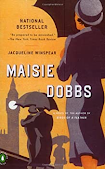
Jacqueline Winspear, Maisie Dobbs, Birds of a Feather, Pardonable Lies

These were recommended on someone's blog, I forget whose. Thank you, whoever you were! These are sort-of mystery stories, set in England and France from 1929 and into the 30s, though there are also flashbacks to just before and during WWI. Maisie is the daughter of a working-class family who has the luck to encounter wealthy patrons who organize her education, securing her a place at Oxford, just as WWI breaks out. A year or so into the war, Maisie leaves school and serves as a nurse, eventually as a battlefield nurse. Much of the series (so far, I'm only on book 3) is about the wounds and trauma of the war, not just on Maisie, but on every character in the series. 

Maisie is a bit like Sherlock Holmes, in that she sees and understands what most people don't; but very unlike him in that some of her ability is psychic in nature -- she picks up on ghostly emanations, for instance, and can feel, somehow, what other people are feeling and thinking. 

Very readable. A little more woo than I actually like in my mysteries, but not so much that I couldn't get past it.


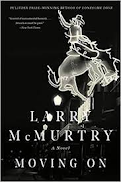
Larry McMurtry, Moving On

This is a re-read. Moving On is one of top ten favorite books, though I can't really say why. It's a thousand-page doorstopper which follows a character, Patsy Carpenter, and her friends around the country for a couple of years of their lives in the mid-1960s. The focus is mainly on marriages, or at least on male-female heterosexual relationships, and there's no real plot. I my mean, things happen -- people have kids, have sex, die, go to rodeos, eat sandwiches -- but there's no sense that McMurtry has any sort of driving theme or plot strand he's following.

And yet I love this book. McMurtry captures life among the middle-class and wealthy in a certain era of American life with pristine clarity. It's set mostly in Houston, but in the first 300 pages or so of the book Patsy and her husband travel through the High Plains and the Midwest, going to rodeos. I love this section of the book: the American road-trip, roadside motels, gas stations, great vistas, small towns, all before the internet, where if you wanted something to read you had to find books at a drugstore, on the magazine rack. I remember that world.

In his introduction to the paperback version I have now, McMurtry writes an essay about how, after he published this book, all the women he knew scolded him because Patsy cries so much, and on my re-read I have to say I agree. Patsy cries pretty much non-stop through the entire book. McMurtry says, sounding bewildered, that all the women he knew did cry pretty much non-stop. But I think he's being disingenuous -- even in this book, not all of the women spend all their time crying. Just Patsy. 

There are a lot of women in the book. In fact, I think this book is more about women than it is about marriages and m/f relationships -- although all the women are in relationships. 

Anyway, if you're looking for a long, wonderfully written book in which nothing much happens, including nothing really bad, this one is for you.


John Barnes, Mother of Storms

This is another re-read: a science fiction novel about what happens when the methane under the polar ice caps melts (or in this case, is melted). Rapid warming over the oceans of the world, in this book, followed by massive and deadly hurricanes. Written in 1998, when global warming was not yet on everyone's radar, this book gets many things right -- the disaster that global warming will be; the pervasiveness of the internet; the damage channels like Fox News can do to the world politics. It gets other things wrong, and it has an extremely squicky subplot involving a politician who has children raped and murdered for his own pleasure; there's also a bit of woo here, involving the internet (still in its infancy at the time). I hadn't read this one since it came out, and the re-read was interesting. Only for hardcore SF fans, though.